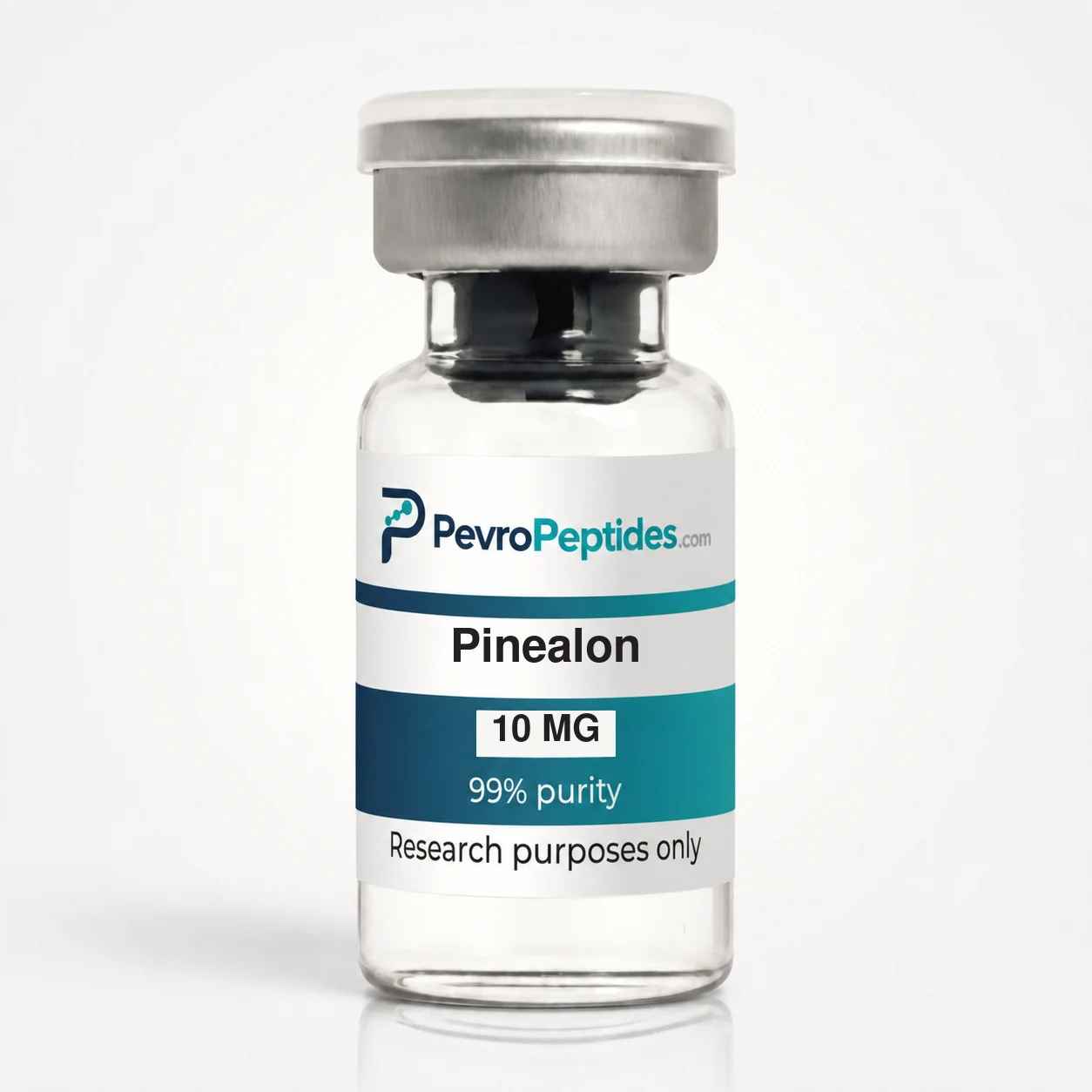
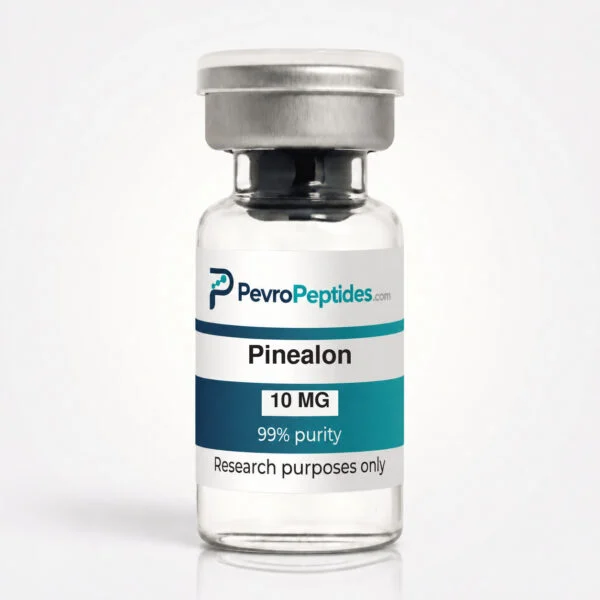
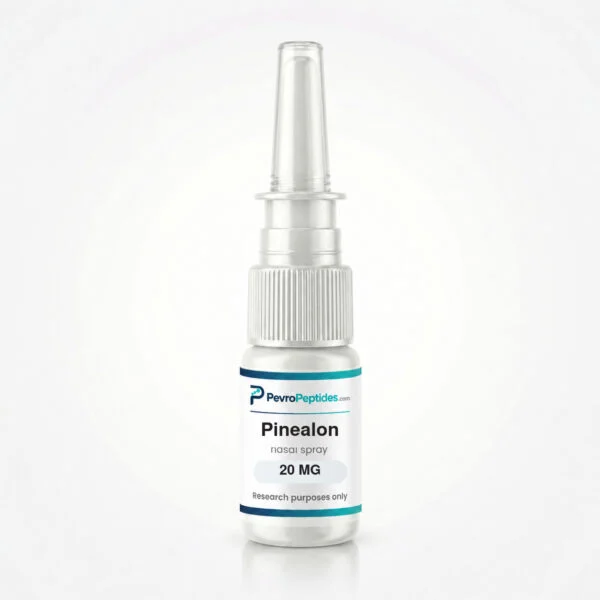
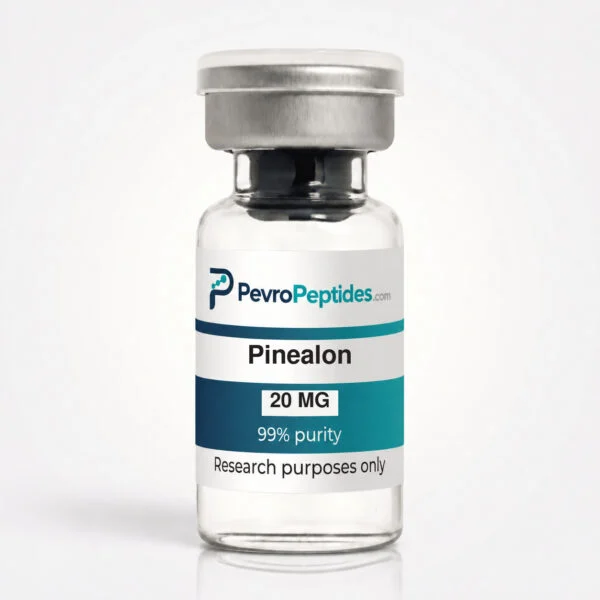
Pinealon is a synthetic short peptide from the group of Khavinson bioregulators, chemically a tripeptide composed of glutamic acid, aspartic acid, and arginine. In scientific research, it is studied as a model compound for peptide-nucleic acid interaction and as a reference standard in analytical work. This compound is offered as a freeze-dried powder of 10 mg per vial, exclusively for laboratory and research purposes.
What is Pinealon?
Pinealon (L-alpha-glutamyl-L-alpha-aspartyl-L-arginine, sequence Glu-Asp-Arg, in the literature code EDR) is a linear tripeptide with the molecular formula C15H26N6O8 and a molecular weight of 418.40 Da. The chain combines two acidic side chains—glutamic acid and aspartic acid—with the strongly basic arginine, causing the molecule to carry both negative and positive charge density over a very short distance. This charge distribution in just three amino acids makes the compound a widely used model for the interaction between short peptides and charged biopolymers.
In research models, Pinealon is studied as a ligand for double-stranded DNA: spectroscopy and molecular modeling describe how short peptides with this amino acid configuration target specific nucleotide sequences in the major groove of the double helix in vitro. In cell models, it is subsequently investigated whether such binding is associated with changes in chromatin packing—the transition from densely packed heterochromatin to more accessible euchromatin—and thereby with the transcription of specific genes. This working hypothesis from the Khavinson research line has so far been investigated primarily in vitro and in preclinical models. Consequently, Pinealon is used within scientific research as a model compound and reference substance.
Research areas
In a laboratory context, Pinealon occurs in the following research areas, among others:
- Biophysical research into the binding of short peptides to double-stranded DNA, measured using spectroscopic techniques in vitro.
- Molecular modeling studies of the structure-activity relationship of tripeptides with an acid-base charge profile.
- Epigenetically oriented modeling of chromatin packing and the accessibility of promoter regions.
- Gene expression research in cell culture systems, in which transcript levels are monitored in vitro.
- Analytical method development and validation (HPLC, LC-MS) using Pinealon as the reference standard.
- Stability and solubility studies of freeze-dried tripeptides under controlled conditions.
Each of these applications involves controlled laboratory or preclinical model research.
Pinealon in our research assortment
Pinealon falls under the category of freeze-dried peptides in vial form within our range. Researchers in this category regularly combine the compound with other short peptides that are studied via their own biochemical target. While Pinealon focuses on the interaction between a short peptide and nucleic acids, other components in the same product line have been chosen to cover receptor-linked or enzymatic targets. These compounds share the freeze-dried form but differ fundamentally in chain length and investigated mechanism.
Specifications
| Specification |
Value |
| Sample |
Pinealon |
| Synonyms |
L-alpha-glutamyl-L-alpha-aspartyl-L-arginine; Glu-Asp-Arg; EDR peptide |
| CAS number |
175175-23-2 |
| Molecular formula / weight |
C15H26N6O8 / 418.40 Da |
| PubChem CID |
10273502 |
| Class |
Synthetic tripeptide, short peptide bioregulator (cytogen) |
| Form |
Lyophilisate (freeze-dried powder) |
| Quantity per bottle |
10 mg |
| Storage |
Keep refrigerated, protected from light and moisture |
Shape, handling and storage
Pinealon is supplied as a freeze-dried powder, standardized to 10 mg per vial. Unlike a solid tablet form, a lyophilisate is dissolved in a suitable solvent prior to analytical or cell culture work; the dry state serves the stability of the peptide chain during transport and storage.
Store the unopened vial refrigerated, protected from direct light and moisture, in the original packaging; for longer periods, the dry lyophilisate should be stored frozen. Observe the compound with standard laboratory precautions: work in a clean environment, use appropriate personal protective equipment, and prevent cross-contamination with other research materials. Keep the packaging out of reach of unauthorized persons.
Composition and lab results
This lyophilisate has a controlled purity of ≥ 99% (HPLC), determined on the peptide chain Glu-Asp-Arg. The vial contains exclusively the freeze-dried peptide.
You can find an overview of the available analytical documentation on our lab results pageThe reports are collected centrally there, so that you can incorporate the data into your own research records.
Frequently Asked Questions
To which class of substances does Pinealon belong?
Pinealon is a synthetic tripeptide with the sequence Glu-Asp-Arg and belongs to the short peptide bioregulators (cytogens) of the Khavinson research line. It is therefore not a small organic molecule, but an amino acid chain.
What is being investigated regarding the DNA interaction of Pinealon?
In vitro studies using spectroscopy and molecular modeling describe how the EDR motif targets specific nucleotide sequences in the major groove of the double helix. In cell models, the question then is whether this binding is associated with looser chromatin packing and altered transcription — the central focus of mechanistic laboratory research into this connection.
In what form is the compound supplied?
As a freeze-dried powder of 10 mg per vial. A lyophilisate is dissolved in a suitable solvent prior to analytical or cell culture work.
How do I store the bottle?
Refrigerated, protected from light and moisture, preferably in the original packaging.

















 Pick up from the Woodmart Store
 Courier delivery
 DHL Courier delivery




Reviews
There are no reviews yet.