AHK-Cu is a synthetic copper tripeptide complex composed of the amino acids alanine, histidine, and lysine (Ala-His-Lys), chelated with a divalent copper ion (Cu²⁺). It belongs to the class of copper peptides and—like the closely related GHK-Cu—is studied in scientific research as a model compound in dermatological and biochemical laboratory systems. AHK-Cu is offered exclusively for laboratory and research purposes.
What is AHK-Cu?
AHK-Cu (systematically also referred to as Copper tripeptide-3) is a small tripeptide in which a single copper ion is firmly held by the peptide chain. The imidazole ring of the histidine residue and the nitrogen atoms of the peptide backbone together form a chelate environment that coordinates the Cu²⁺ ion. Thus, AHK-Cu is structurally related to the classical copper tripeptide GHK-Cu; the difference lies in the N-terminal residue, where AHK-Cu carries an alanine instead of the glycine of GHK-Cu.
Due to this defined, reproducible structure, AHK-Cu serves in research as an accurate tool to study the chemistry of copper peptides and the dynamics of copper ions in model systems. Within the context of in vitro and preclinical research, the compound is used as a model compound, not as a means for human or animal application.
Raziskovalna področja
In a controlled laboratory environment, AHK-Cu is used in the following research areas, among others:
- Copper peptide chemistry — study of the chelation of Cu²⁺ and the behavior of copper ions in model systems.
- Models of the hair follicle cycle — dermatological studies in which follicular dynamics are investigated in vitro.
- Dermal papilla cells — proliferation and signaling assays in cell culture.
- Extracellular matrix (ECM) models — research into collagen- and elastin-related gene expression in cultured cells.
- Comparative copper peptide study — AHK-Cu alongside GHK-Cu and other tripeptide-copper complexes as a reference.
- Analytical chemistry — application as an HPLC reference and study of solubility and conformational stability of short peptides.
AHK-Cu compared with related compounds
AHK-Cu is often compared to other copper peptides in research. The most studied related compound is GHK-CU, the original copper tripeptide (Gly-His-Lys + Cu²⁺) upon which much of the dermatological model literature is based. AHK-Cu and GHK-Cu share a similar chelation motif but differ in their N-terminal amino acid, which provides an interesting point of comparison in structure-activity models.
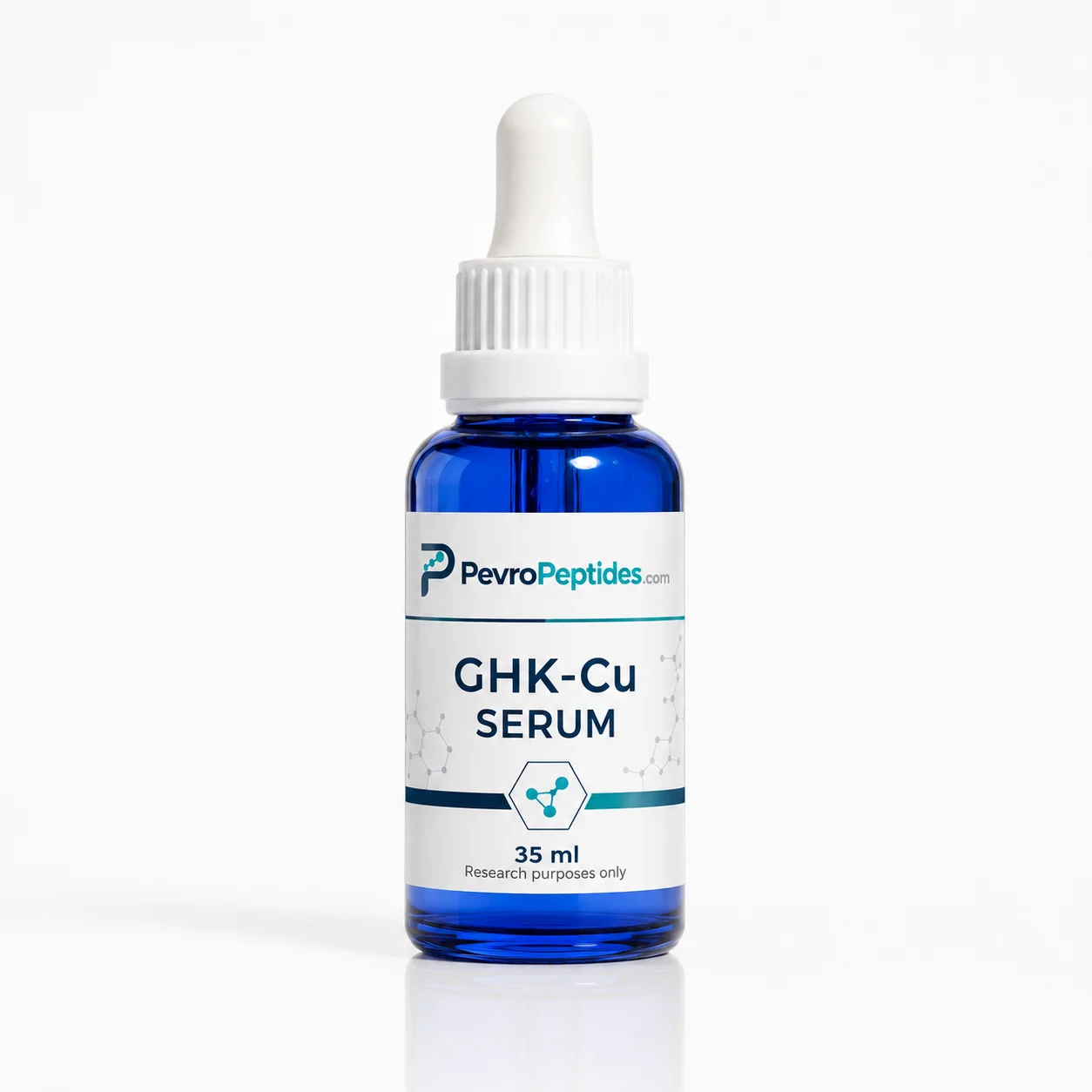
For research focusing on a topical, ready-to-use formulation, there are the serum variants. AHK-Cu Serum 30ml in GHK-CU Serum 30ML, in which the same active ingredients are incorporated into an aqueous research base. Those who wish to explore peptide chemistry surrounding skin and matrix models more broadly also often involve Matriksil 10 mg in the comparison, a matrix-targeted signal peptide that is studied in similar ECM models.
Specifikacije
| Specifikacija |
Vrednost |
| Vzorec |
AHK-Cu (Alanyl-L-Histidyl-L-Lysine + copper(II) complex) |
| Sinonimi |
Copper tripeptide-3, AHK-Cu complex |
| PubChem CID |
169450582 |
| Zaporedje |
Ala-His-Lys (with Cu²⁺) |
| Razred |
Copper tripeptide complex |
| Contents |
100 mg |
| Oblika |
Liofiliziran prašek (suhi prašek) |
| Čistost |
≥ 99 % (HPLC) |
| Shranjevanje |
Hranite v hladilniku, zaščiteno pred svetlobo in vlago |
Oblika, ravnanje in shranjevanje
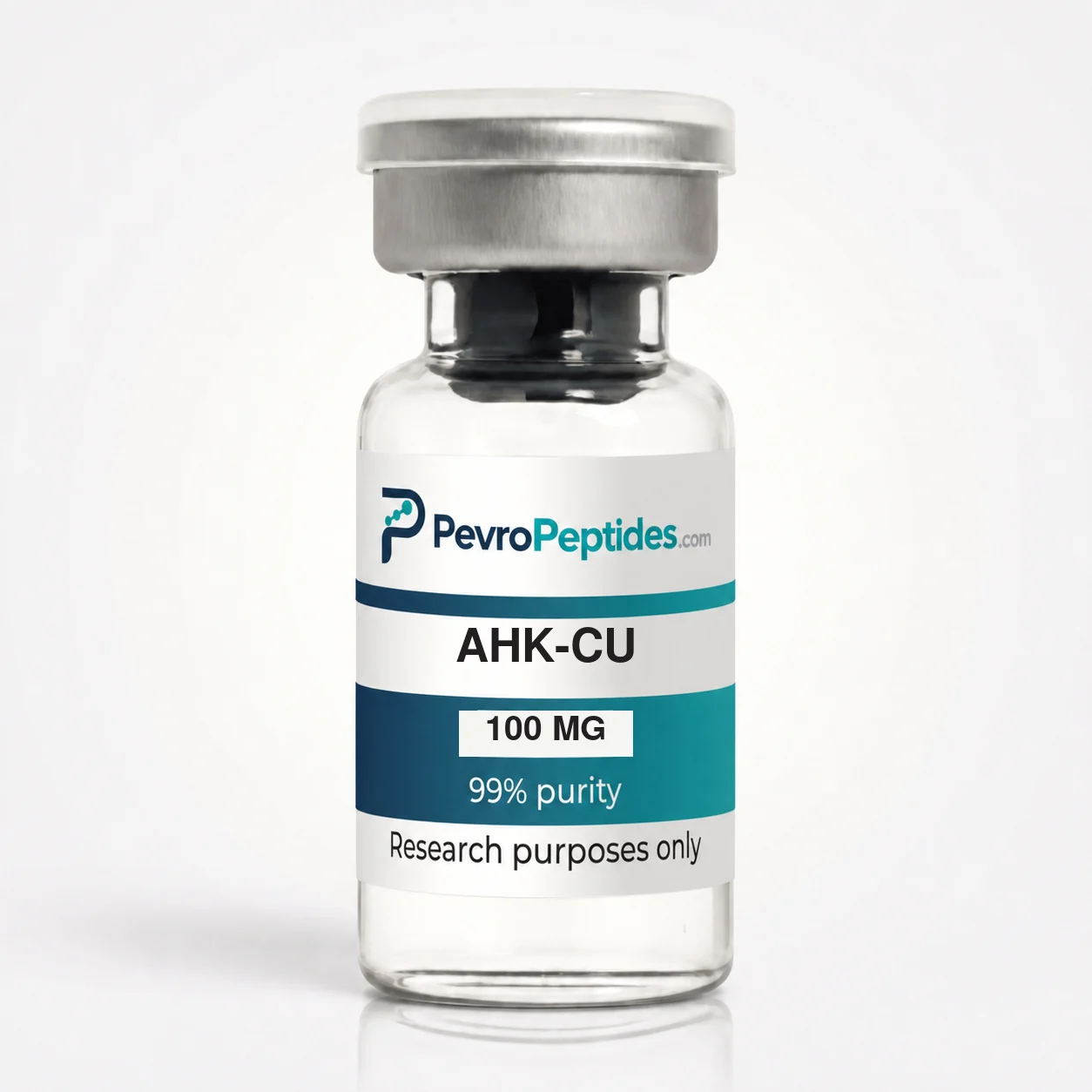
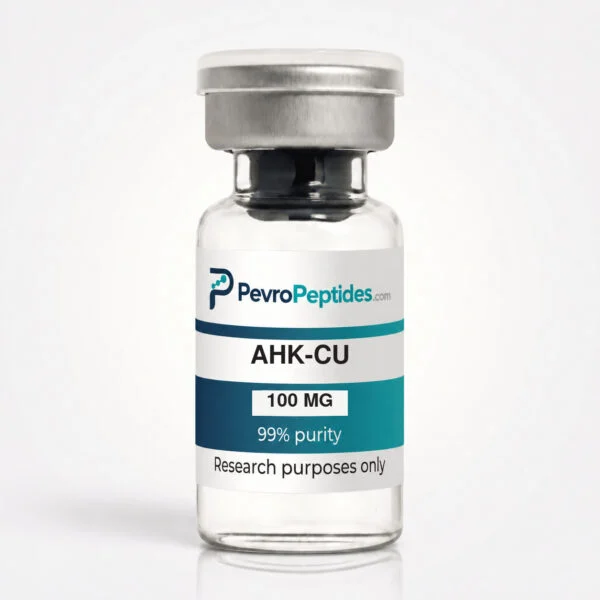
AHK-Cu is supplied as a freeze-dried powder (lyophilisate) in a 100 mg vial. The freeze-dried powder is stable when stored in a cool, dark place, protected from light and moisture. For use in a research setup, the compound is typically reconstituted with bacteriostatic water; after reconstitution, the solution is stored refrigerated (2–8 °C). When opening and dissolving, work in a clean, controlled environment and avoid repeated temperature fluctuations to maintain the integrity of the peptide-copper complex.
As a copper-containing complex, AHK-Cu has a characteristic blue to blue-purple color in solution; this color is inherent to the coordinated Cu²⁺ ion and is a normal feature of copper peptides.
Čistost in laboratorijski rezultati
AHK-Cu is offered with a controlled purity of ≥ 99% (HPLC). Purity and identity are analytically determined by liquid chromatography. An overview of the available analysis certificates and lab results can be found on the stran z rezultati laboratorijskih preiskav.
Pogosto zastavljena vprašanja
What is the difference between AHK-Cu and GHK-Cu?
Both are copper tripeptides that are studied in similar dermatological and ECM models. The difference lies in the N-terminal amino acid: AHK-Cu carries an alanine, GHK-Cu a glycine. This makes AHK-Cu a useful related reference in structure-activity research.
In what form is AHK-Cu supplied?
As a freeze-dried powder (lyophilisate) in a 100 mg vial. In a research context, it is reconstituted with bacteriostatic water to a working solution.
Why does AHK-Cu contain copper?
The copper ion (Cu²⁺) is an integral part of the complex: the peptide chain chelates the ion in a defined geometry. It is precisely this copper coordination that makes AHK-Cu relevant as a model compound for research into copper peptides.
How do I best store AHK-Cu?
Store the freeze-dried product in a cool, dark place, protected from light and moisture. After reconstitution, keep the solution refrigerated (2–8 °C).
Is AHK-Cu suitable for human use?
No. AHK-Cu is intended exclusively for laboratory and research purposes and is not intended for human or animal consumption or for any medical, therapeutic, or cosmetic application.
Želite izvedeti več? Preberite naš vodnik: Copper peptide (GHK-Cu): what it is, the forms and how to use them.
Namenjeno izključno za laboratorijske in raziskovalne namene. Ni za prehrano ljudi ali živali ali za medicinsko, diagnostično, terapevtsko ali kozmetično uporabo. Kupec je star 18 let ali več in potrjuje kontekst raziskave. Ni zdravilo.
















 Prevzem v trgovini Woodmart
 Kurirska dostava
 Dostava s kurirjem DHL



Mnenja
Zaenkrat še ni mnenj.