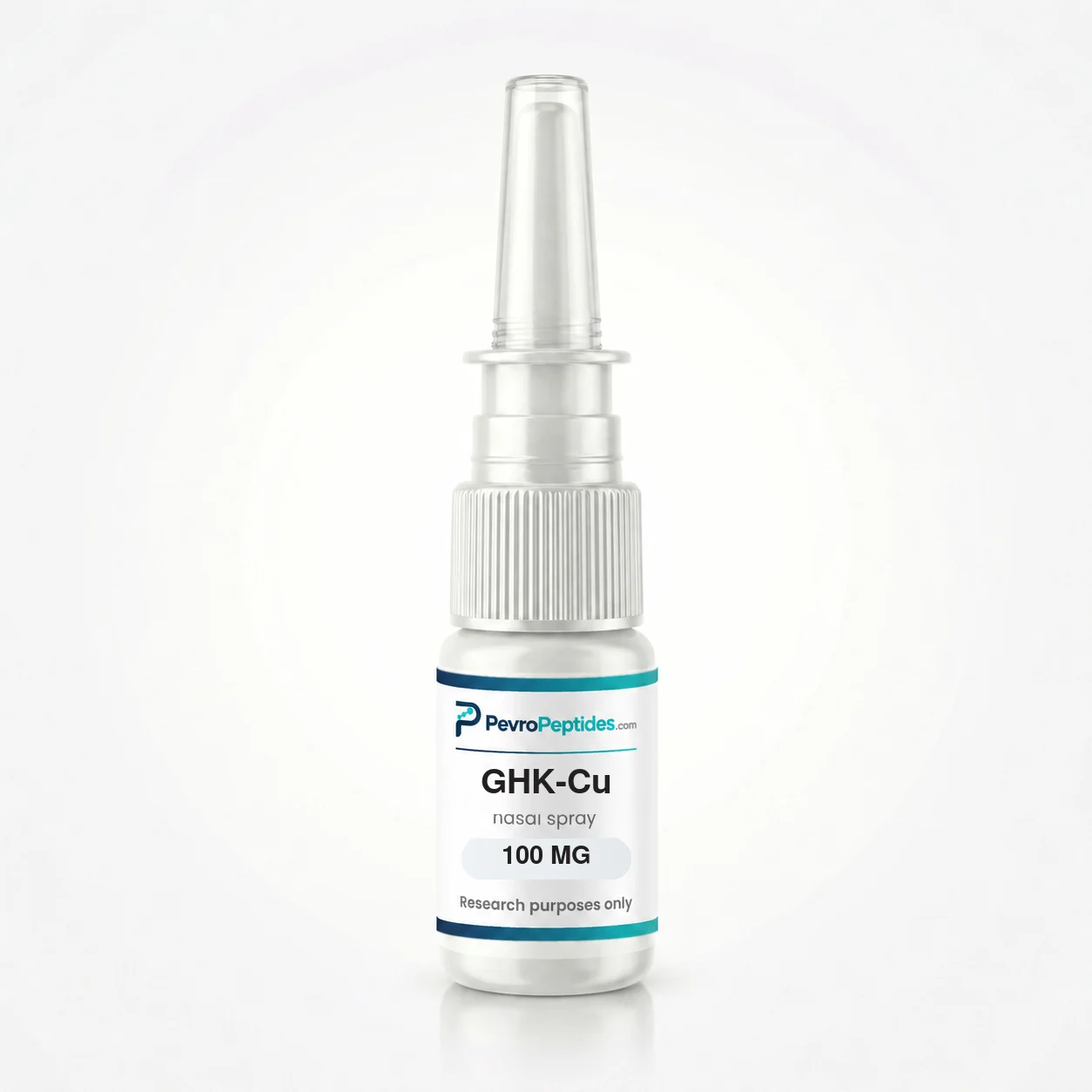
GHK-Cu is a naturally occurring metallopeptide, chemically a coordination complex of the tripeptide glycyl-L-histidyl-L-lysine with a copper(II) ion. In scientific research, it is studied as a model compound for metal-peptide coordination chemistry and as a reference standard in analytical work. This compound is offered as a kit containing 100 mg of freeze-dried lyophilisate and associated laboratory materials, exclusively for laboratory and research purposes.
Czym jest GHK-Cu?
GHK-Cu (glycyl-L-histidyl-L-lysine-copper(II), also referred to in the literature as copper tripeptide-1 or prezatide-copper) consists of a short chain of glycine, histidine, and lysine that jointly coordinate one copper(II) ion. The metal ion is bound via the imidazole ring of histidine, the terminal amino group of glycine, and the intervening peptide bond; the free tripeptide itself has the formula C14H24N6O4 (340.38 Da). This sharply defined coordination makes the compound a widely used model system in bioinorganic chemistry: stable enough to isolate, labile enough to study copper transfer measurably.
In research models, GHK-Cu is primarily investigated in its role as a copper carrier. In vitro, the complex functions as an exchangeable reservoir from which copper(II) is transferred to copper-binding proteins and copper-dependent enzymes such as lysyl oxidase and superoxide dismutase; the redox chemistry of the bound metal ion is a recurring area of interest in cell-free systems. In cell models, gene expression profiles are mapped, in which the peptide part and the metal ion stand opposite each other as separate variables. Consequently, GHK-Cu is used within scientific research as a model compound and reference substance.
Obszary badań
W kontekście laboratoryjnym GHK-Cu występuje między innymi w następujących obszarach badawczych:
- Bioinorganic research into coordination geometry and stability constants of copper(II)-peptide complexes.
- Enzymological research into copper-dependent enzymes and copper transfer between ligands in cell-free systems.
- Structure-activity research in which the Gly-His-Lys motif is systematically varied or extended.
- Model studies of copper uptake and gene expression profiles in in vitro cell culture systems.
- Analytical method development and validation (HPLC, LC-MS, UV-Vis) using GHK-Cu as the reference standard.
- Stability and solubility studies of metallopeptides under controlled pH and temperature conditions.
Każde z tych zastosowań obejmuje kontrolowane badania laboratoryjne lub badania na modelu przedklinicznym.
GHK-Cu w naszym asortymencie badawczym
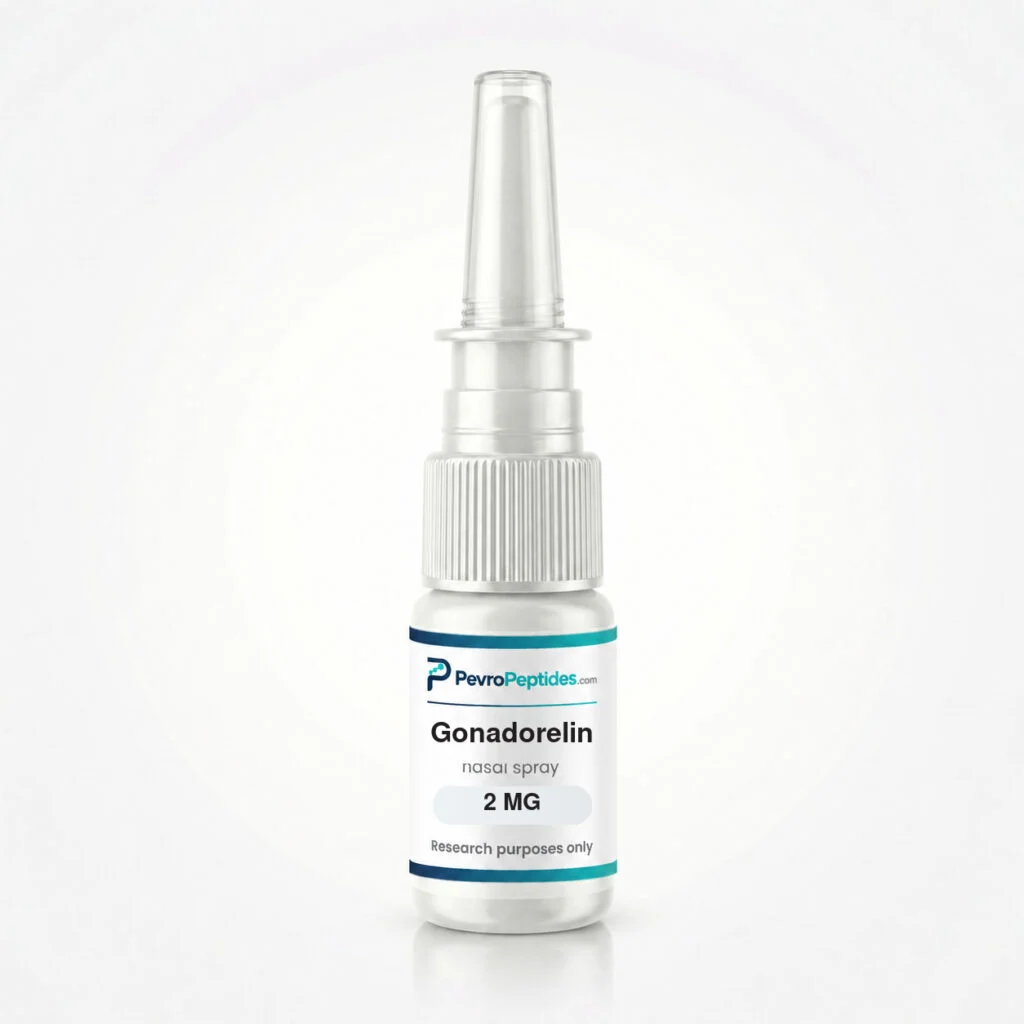
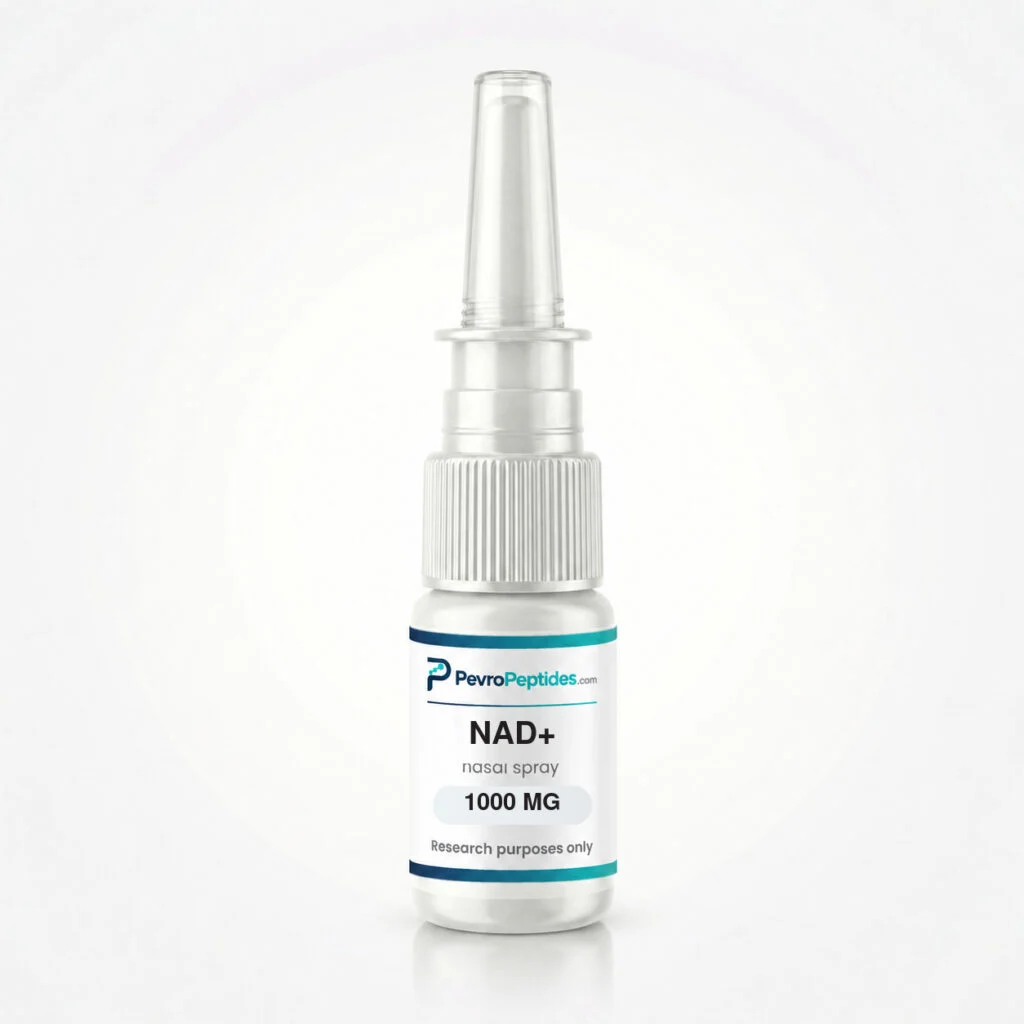
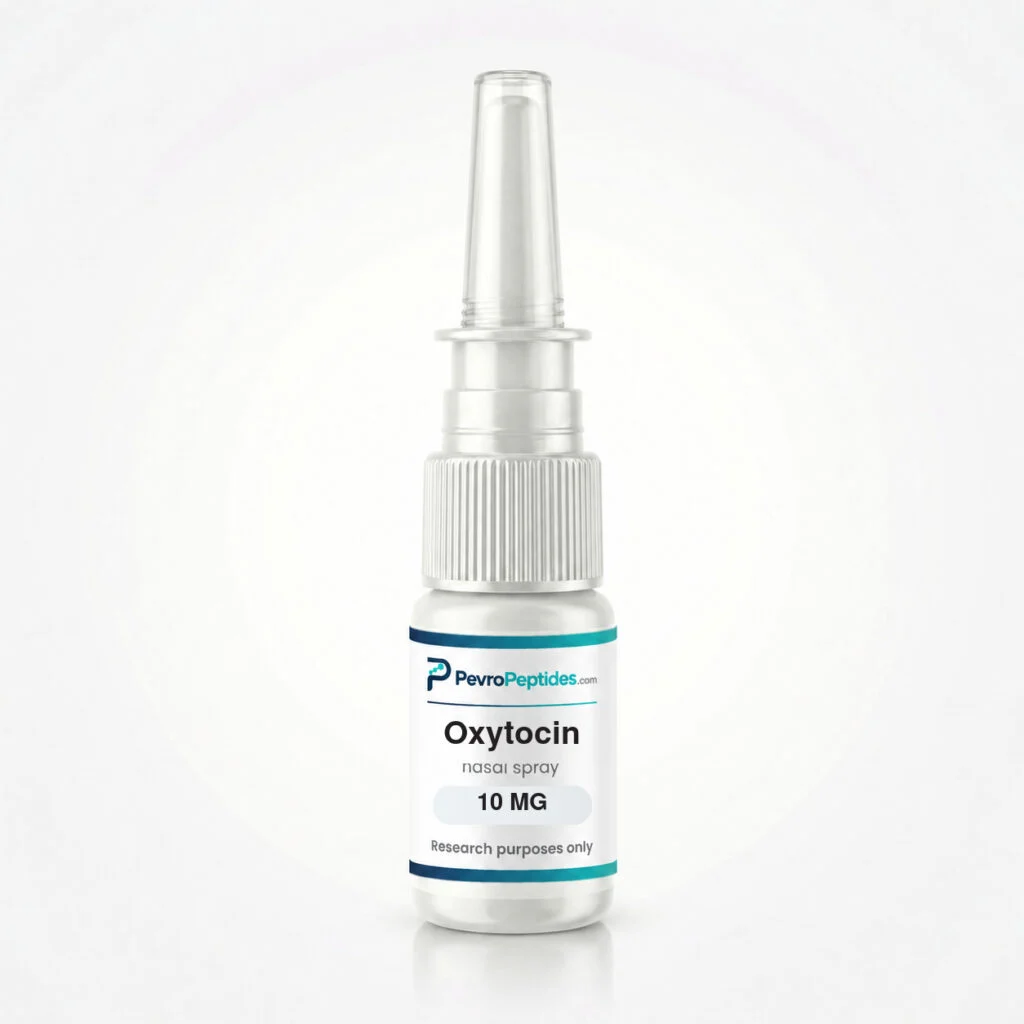
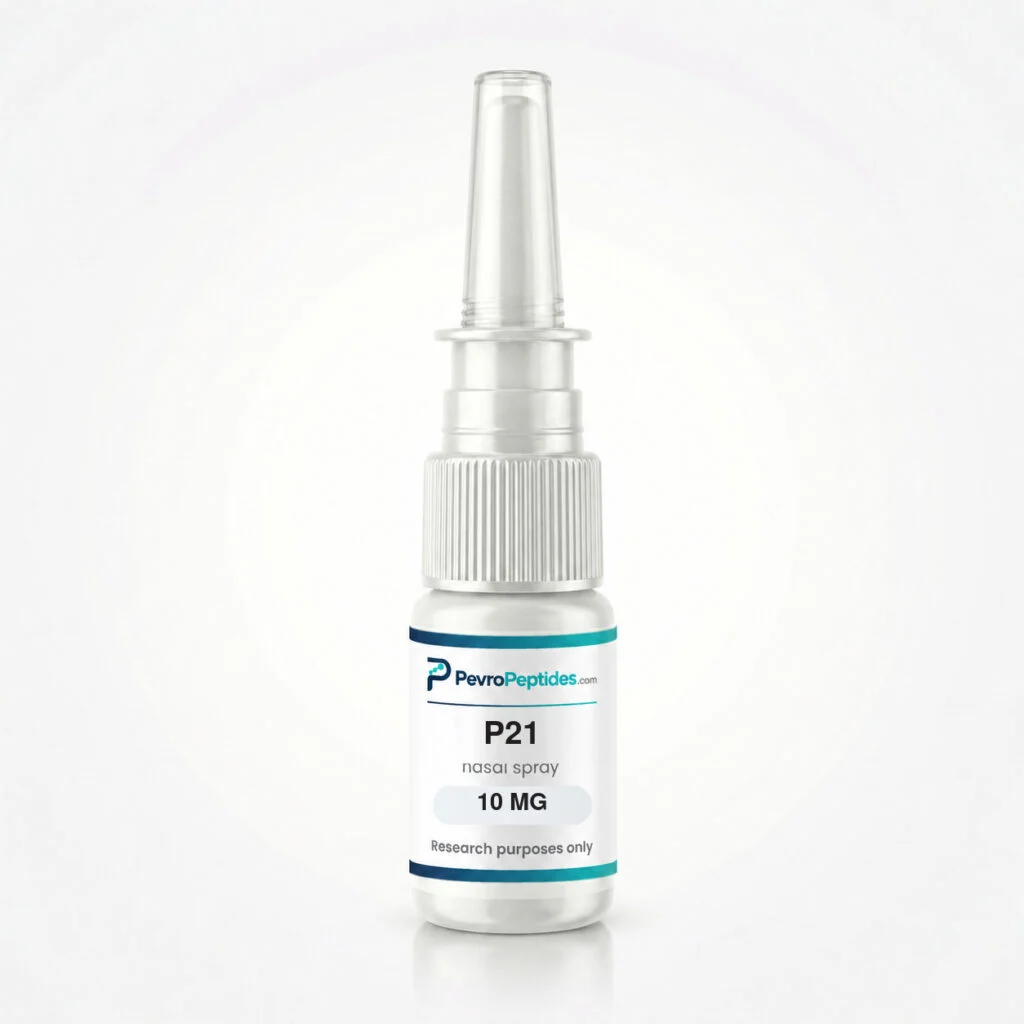
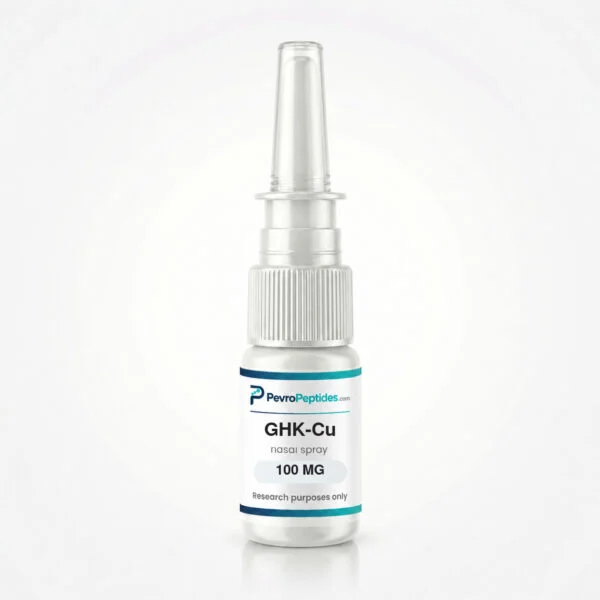
GHK-Cu falls under the category of nasal spray kits within our range: formulations in which a freeze-dried lyophilisate, a sterile saline solution, and an empty spray bottle are supplied as a single complete set. While GHK-Cu focuses on the coordination and transfer of a metal ion, other components within the same product line have been specifically chosen to cover receptor-bound or enzymatic targets. They share the kit format but differ fundamentally in molecular class and investigated mechanism.
Specyfikacje
| Specyfikacja |
Wartość |
| Próbka |
GHK-Cu |
| Synonimy |
Glycyl-L-histidyl-L-lysine-copper(II); copper tripeptide-1; prezatide copper |
| Numer CAS |
89030-95-5 (copper complex); 49557-75-7 (free tripeptide) |
| Wzór cząsteczkowy / masa |
C14H23CuN6O4 (cation) / 402.92 Da |
| Identyfikator CID PubChem |
71587328 (copper complex); 73587 (free tripeptide) |
| Klasa |
Tripeptide-copper(II) complex (metallopeptide) |
| Postać |
Kit: freeze-dried lyophilisate, saline solution and spray bottle |
| Ilość na jednostkę |
100 mg per vial |
| Liczba sztuk w opakowaniu |
1 complete kit |
| Składowanie |
Freeze-dried, cool and dark; in dissolved form refrigerated at 2–8 °C |
Kształt, obsługa i przechowywanie
The kit contains 100 mg GHK-Cu as freeze-dried lyophilisate in a sealed vial, together with a sterile saline solution and an empty spray bottle. Unlike solid tablet forms, reconstitution is required for a lyophilisate: the material is dissolved prior to analytical work. The powder is light blue to blue-violet, characteristic of copper(II) peptide complexes.
Store the unopened vial in a cool, dry, and dark place in the original packaging; in dissolved form, the material should be kept refrigerated at 2–8 °C. Handle the compound with the usual laboratory precautions: work in a clean environment, use appropriate protective equipment, and prevent cross-contamination. Metallopeptides are sensitive to repeated temperature changes. Keep the kit out of reach of unauthorized persons.
Skład i wyniki badań laboratoryjnych
The lyophilisate in this kit has a controlled purity of ≥ 99% (HPLC). The saline solution and the spray bottle are laboratory accessories and do not contain any active compound themselves.
Przegląd dostępnej dokumentacji analitycznej znajdziesz na naszej stronie strona z wynikami badań laboratoryjnychRaporty są tam gromadzone centralnie, dzięki czemu możesz włączyć dane do własnych zapisów badań.
Często zadawane pytania
Do jakiej klasy substancji należy GHK-Cu?
GHK-Cu is a metallopeptide: a complex of the naturally occurring tripeptide glycyl-L-histidyl-L-lysine with a copper(II) ion. This distinguishes it from ordinary peptides, which do not contain a coordinated metal ion.
Why is the copper ion decisive in the research?
In research models, the complex serves as an exchangeable reservoir for copper(II). The peptide portion binds the metal ion in a defined coordination, allowing the transfer to copper-binding proteins and enzymes to be quantitatively monitored in vitro.
W jakiej postaci jest dostarczany związek?
As a complete kit with 100 mg freeze-dried lyophilisate in a sealed vial, a sterile saline solution, and an empty spray bottle.
How do I store the kit?
Store in a cool, dry, and dark place in the original packaging. Refrigerate in dissolved form at 2–8 °C, with minimal temperature fluctuations.

















 Odbiór w sklepie Woodmart
 Dostawa kurierska
 Dostawa kurierska DHL



Opinie
Na razie nie ma opinii o produkcie.