For laboratory and research purposes only. Not for human or veterinary use.
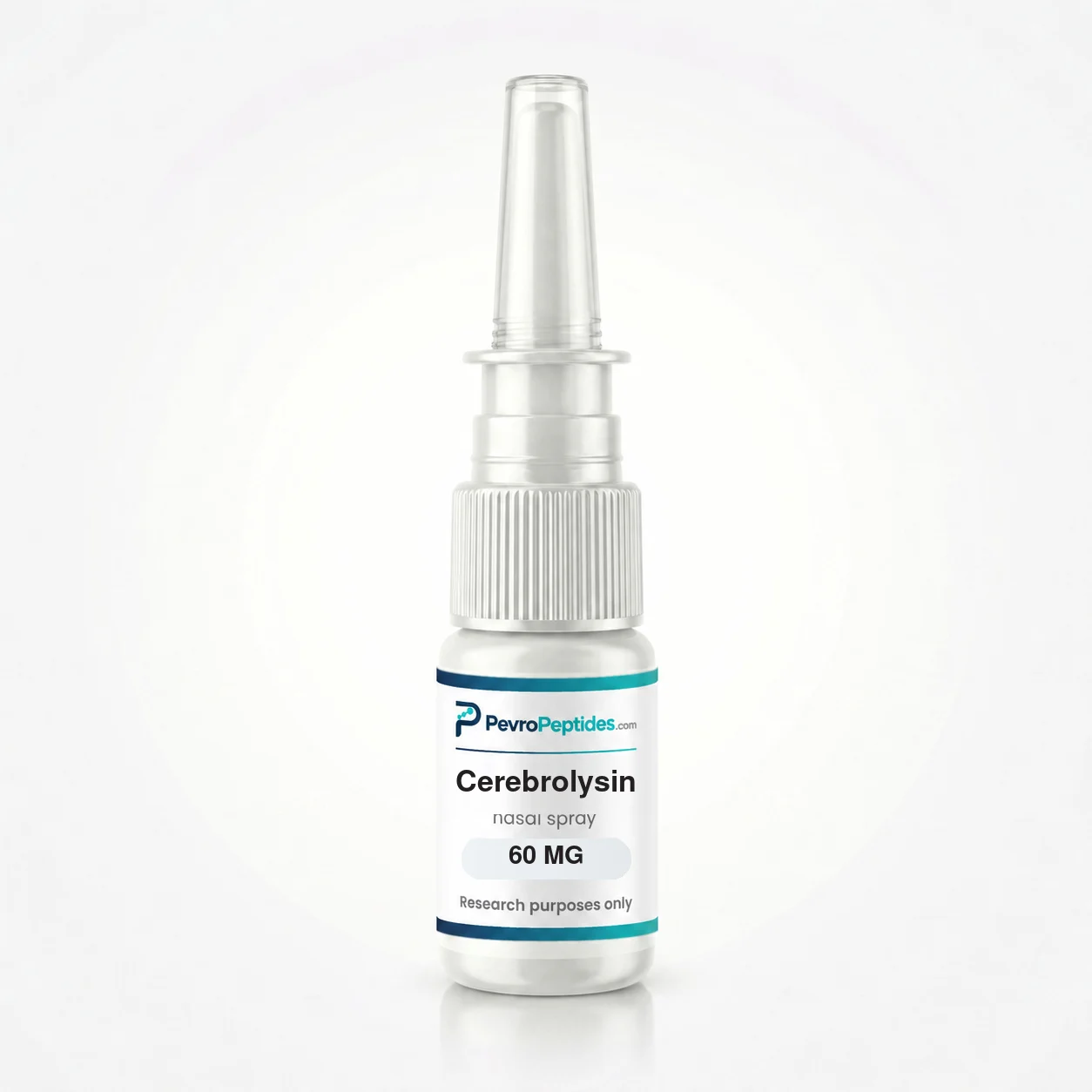
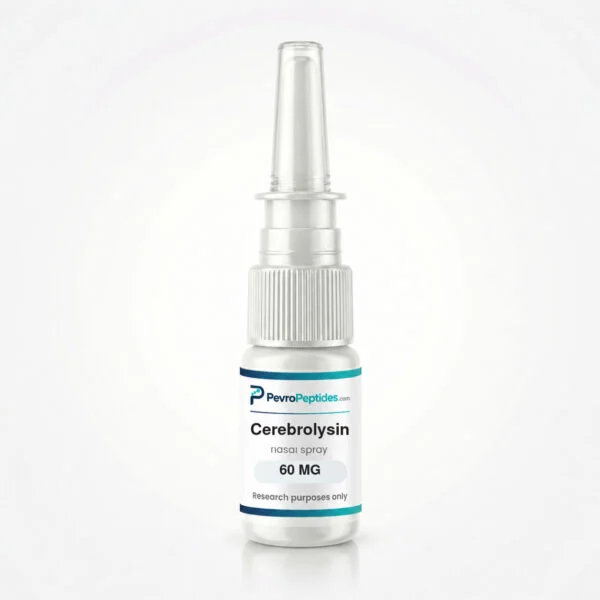
Cerebrolysin is a standardized peptide preparation studied in controlled laboratory environments within the context of peptide-mediated signaling pathways and molecular regulatory systems. In scientific research, the material is used as a model preparation for complex peptide fractions and as reference material in analytical work. The material is offered as 60 mg freeze-dried lyophilisate in a sealed research vial, supplied as a kit with sterile sodium chloride solution and a spray bottle.
What is Cerebrolysin?
Cerebrolysin is not a single chemical compound, but a standardized enzymatic hydrolysate: purified brain proteins of porcine origin are cleaved under controlled conditions into a defined fraction of low-molecular-weight peptides under 10 kDa, supplemented with free amino acids. Because the process is standardized, the molecular profile is reproducible: the distribution of peptide lengths and the amino acid composition are characteristic and can be characterized chromatographically. This combination of complexity and reproducibility makes the material a widely used model in the study of multicomponent peptide fractions.
In research models, Cerebrolysin is studied in relation to peptide-mediated signaling pathways and molecular regulatory mechanisms in cell culture systems. The research often focuses on how a compound fraction behaves in vitro compared to purified, single peptides. Due to its stable analytical behavior, the material regularly serves as reference input in comparative peptide studies. Consequently, Cerebrolysin is used as a model compound and reference substance within scientific research.
Research areas
In a laboratory context, Cerebrolysin occurs in the following research areas, among others:
- Proteomic characterization of complex peptide mixtures and molecular mass distributions within a hydrolysate.
- Studies of peptide-mediated signaling pathways and molecular regulatory networks in controlled cell models in vitro.
- Research into enzymatic protein hydrolysis and the influence of process conditions on the resulting peptide fraction.
- Comparative study in which a compound peptide fraction is compared against purified, single peptides.
- Analytical method development and validation (HPLC, LC-MS, amino acid analysis) where the preparation serves as reference material.
- Stability study of low-molecular-weight peptides under defined temperature and humidity conditions.
Each of these applications involves controlled laboratory or preclinical model research.
Analytical specification
The identity of this material is not defined by a single molecular formula, but by a reproducible compositional profile of low-molecular-weight peptides and free amino acids. Therefore, for a hydrolysate, it is not a single purity percentage that is decisive, but the consistency of the fraction itself. Identity and composition are decisive in analytical work: variation in the peptide distribution or the presence of degradation products influences the interpretation of measurement results. An overview of the available analytical documentation can be found on our website. lab results page.
Specifications
| Specification |
Value |
| Sample |
Cerebrolysin |
| Synonyms |
Cerebrolysin; cerebroprotein hydrolyzate; FPF 1070 |
| CAS number |
12656-61-0 |
| UNII |
37KZM6S21G |
| Molecular fraction |
Low molecular weight peptides < 10 kDa, with free amino acids |
| Class |
Standardized enzymatic hydrolysate of purified brain proteins (porcine origin) |
| Form |
Freeze-dried lyophilisate in a sealed vial, supplied as a kit |
| Quantity per vial |
60 mg |
| Specification |
Standardized peptide fraction with controlled composition profile |
| Storage |
Store in a cool, dark place, protected from light and moisture. |
Shape, handling and storage
Cerebrolysin is supplied as 60 mg freeze-dried lyophilisate in a sealed vial. The lyophilization process preserves the molecular integrity of the peptide fraction during storage and transport. The powder is white to light yellow and slightly hygroscopic; minor color variations between shipments are inherent to an enzymatic hydrolysate and do not constitute an indication of quality or defect. In addition to the vial, the kit contains a sterile 0.9% sodium chloride solution and an empty spray bottle.
Store the sealed lyophilisate in a cool, dry, and dark place in the original packaging, protected from light and moisture. Handle the material with standard laboratory precautions: work in a clean environment, use appropriate personal protective equipment, and keep the packaging out of reach of unauthorized persons. Dispose of residual material in accordance with applicable laboratory guidelines.
Cerebrolysin in our research assortment
Cerebrolysin falls under the category of freeze-dried research compounds in vial form within our range. Researchers working with this category frequently combine the material with peptides that are studied via their own molecular target. While Cerebrolysin distinguishes itself by the composite nature of the peptide fraction, other components within the same product line have been chosen precisely because they consist of a single defined sequence. These materials share the freeze-dried vial form but differ fundamentally in molecular class and analytical characterization.
Frequently Asked Questions
To which substance class does Cerebrolysin belong?
It is a standardized enzymatic hydrolysate of purified brain proteins of porcine origin, and therefore belongs to the low-molecular-weight peptide fractions and not to the single, synthetic peptides.
Why does this material have no molecular formula?
Because it is not a single compound but a mixture of peptides and free amino acids. The fraction is defined by a molecular mass below 10 kDa and a reproducible composition profile.
Why is that compositional profile relevant in research?
It determines whether measurements between deliveries and laboratories are comparable, and makes the material usable as a reference in analytical methods.
In what form is the material supplied?
As freeze-dried lyophilisate of 60 mg in a sealed vial, supplied as a kit with sterile 0.9% sodium chloride solution and spray bottle.
How do I store the material?
Store in a cool, dry, and dark place in the original packaging, protected from light and moisture.

















 Pick up from the Woodmart Store
 Courier delivery
 DHL Courier delivery



Reviews
There are no reviews yet.