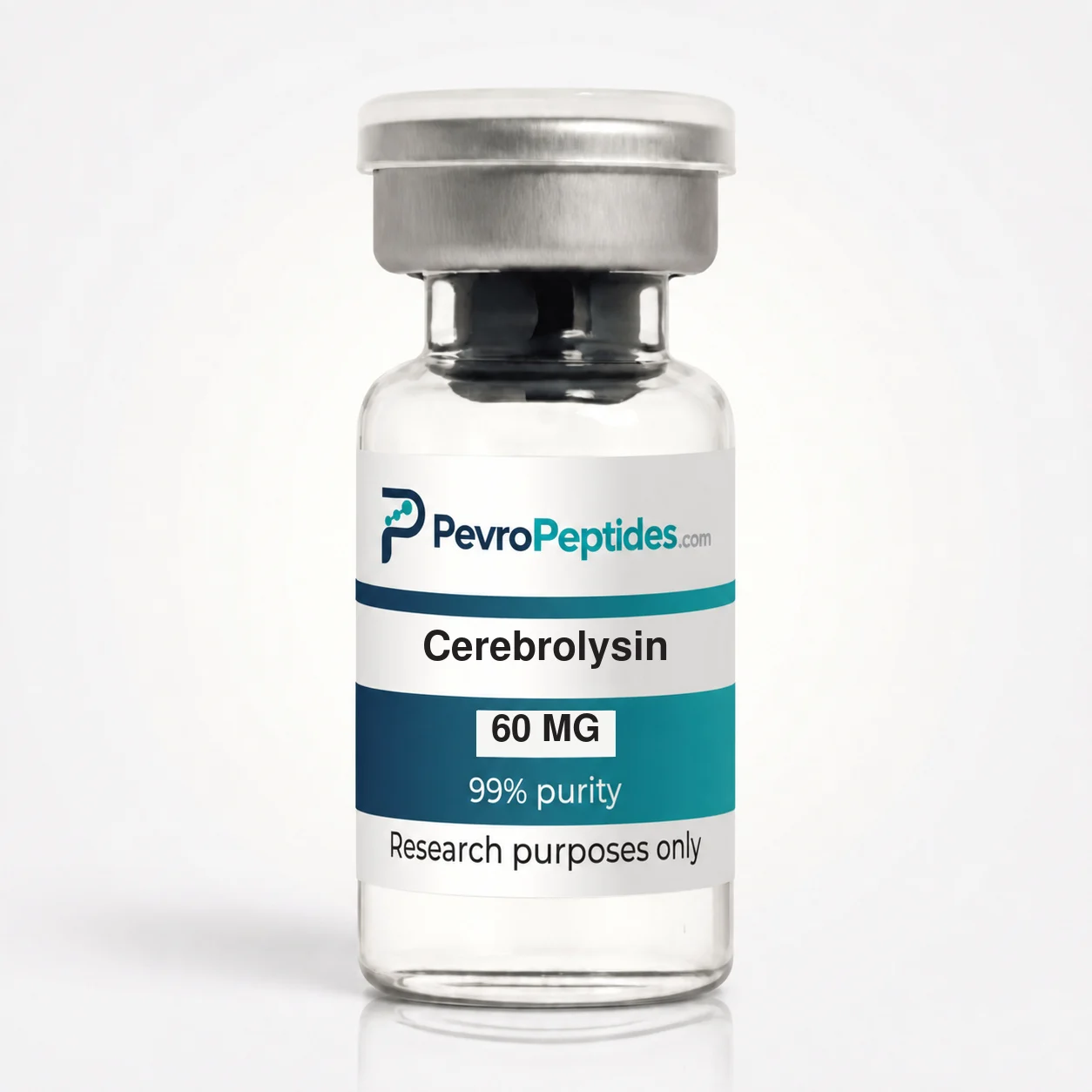
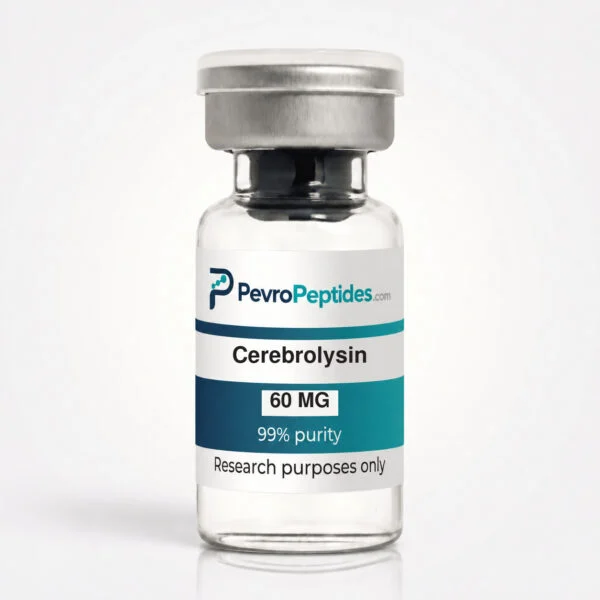
Cerebrolysin is a standardized neuropeptide preparation of biological origin, chemically a low-molecular-weight mixture of peptide fragments and free amino acids. Within scientific research, it is studied as a model compound for neurotrophic signaling and as reference material in analytical work. This compound is offered as a freeze-dried lyophilisate of 60 mg per vial, exclusively for laboratory and research purposes.
What is Cerebrolysin?
Cerebrolysin (development code FPF-1070) is not a single compound with a single molecular structure, but a standardized mixture resulting from controlled enzymatic cleavage of purified proteins from porcine brain tissue. The result is a fraction consisting exclusively of low-molecular-weight components: peptide fragments with a mass below 10 kDa, alongside a significant proportion of free amino acids. In published analytical research, hundreds of individual peptide fragments have been distinguished in such preparations. It is precisely this composite, yet reproducibly produced structure that makes the compound a widely used model in the study of complex peptide mixtures and neurotrophic signaling pathways.
Cerebrolysin is studied in research models because some of the fragments present exhibit structural similarity to active domains of endogenous neurotrophic factors, including ciliary neurotrophic factor (CNTF), glial cell line-derived neurotrophic factor (GDNF), and insulin-like growth factors. In vitro, these fragments have been described as binding to the tyrosine kinase receptors of the neurotrophin system; in cell models, the observed effect disappears when that receptor pathway is pharmacologically blocked, indicating receptor-mediated interaction. Consequently, Cerebrolysin is used as a model compound and reference substance within scientific research.
Research areas
In a laboratory context, Cerebrolysin occurs in the following research areas, among others:
- Research into neurotrophic signaling pathways and receptor-mediated activation of tyrosine kinase receptors in isolated neuronal cell models in vitro.
- Peptide chemical and enzymological research into the fragment distribution resulting from controlled proteolysis of brain tissue proteins.
- Structure-activity studies of short peptide fragments and their affinity for receptors of the neurotrophin system.
- Model studies of neurite outgrowth, dendritic branching, and synaptic plasticity in neuronal cell culture systems.
- Analytical method development and validation (HPLC, peptide characterization) using Cerebrolysin as reference material for complex peptide mixtures.
- Stability and solubility studies of freeze-dried peptide mixtures under controlled conditions.
Each of these applications involves controlled laboratory or preclinical model research.
Cerebrolysin in our research assortment
Cerebrolysin falls under the category of freeze-dried compounds in vial form within our product range. It occupies a special position within this range because it is not a single peptide with a fixed amino acid sequence, but rather a standardized mixture. While Cerebrolysin is studied at the level of neurotrophic receptor signaling, other components within the same product line have been specifically chosen to cover enzymatic, hormonal, or structure-related targets. These compounds share the freeze-dried vial form but differ fundamentally in molecular class, origin, and investigated mechanism.
Specifications
| Specification | Value |
|---|
| Sample | Cerebrolysin (neuropeptide blend) |
| Synonyms | Cerebrolysine; FPF-1070; low-molecular-weight neuropeptide preparation |
| CAS number | 12656-61-0 |
| Class | Standardized low-molecular-weight peptide mixture of biological origin (< 10 kDa) |
| Form | Freeze-dried powder (lyophilisate) in vial |
| Quantity per vial | 60 mg |
| Number of vials per package | 1 |
| Storage | Store in a cool, dry place, protected from light and moisture. |
Shape, handling and storage
Cerebrolysin is supplied as a freeze-dried powder with a standardized amount of 60 mg per vial. The lyophilisate is a dry, solid; unlike solid tablet or capsule formulations, reconstitution is required for this form.
Store the vial in a cool, dry place, protected from direct light and moisture, in the original packaging. Handle the compound with standard laboratory precautions: work in a clean environment, use appropriate personal protective equipment, and prevent cross-contamination with other research materials. Keep the packaging out of reach of unauthorized persons.
Composition and lab results
Because Cerebrolysin consists of many individual peptide fragments and free amino acids, the content is expressed as the total amount of standardized material per vial (60 mg) and not as a purity percentage of a single substance. A single HPLC purity number is not meaningful for a mixture of this nature.
You can find an overview of the available analytical documentation on our lab results pageThe reports are collected centrally there, so that you can incorporate the data into your own research records.
Frequently Asked Questions
To which substance class does Cerebrolysin belong?
Cerebrolysin is not a single peptide with a fixed amino acid sequence, but a standardized mixture of low-molecular-weight peptide fragments (< 10 kDa) and free amino acids, obtained from enzymatically cleaved porcine brain tissue proteins.
What is meant by neurotrophic mimicry in a research context?
This means that some of the peptide fragments in the mixture exhibit structural similarity to active domains of endogenous neurotrophic factors such as CNTF and GDNF. In vitro, these fragments bind to receptors of the neurotrophin system, making the mixture a central focus in mechanistic cell modeling research.
In what form is the compound supplied?
As a freeze-dried powder of 60 mg in a single vial. Laboratory reconstitution is required for this form.
How do I store the vial?
Cool and dry, protected from light and moisture, preferably in the original packaging.

















 Pick up from the Woodmart Store
 Courier delivery
 DHL Courier delivery



Reviews
There are no reviews yet.